Health Application
Kito Health
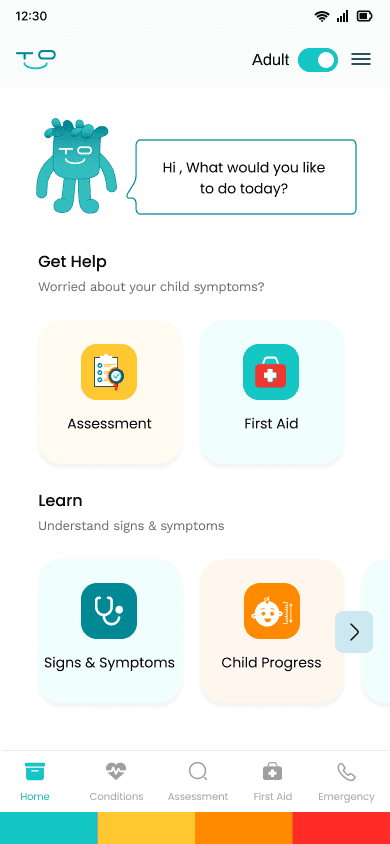
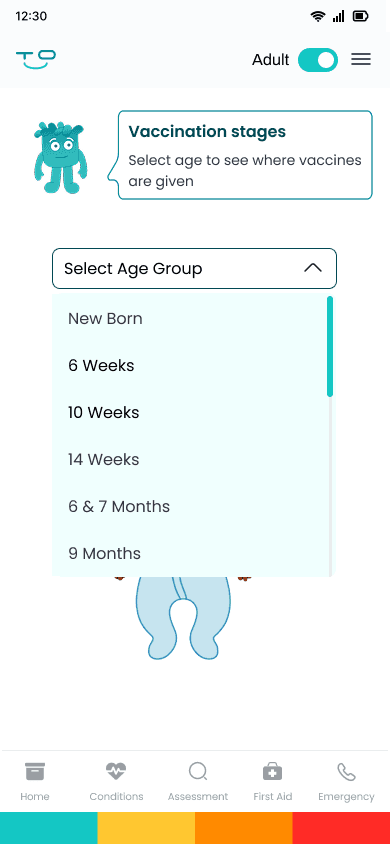

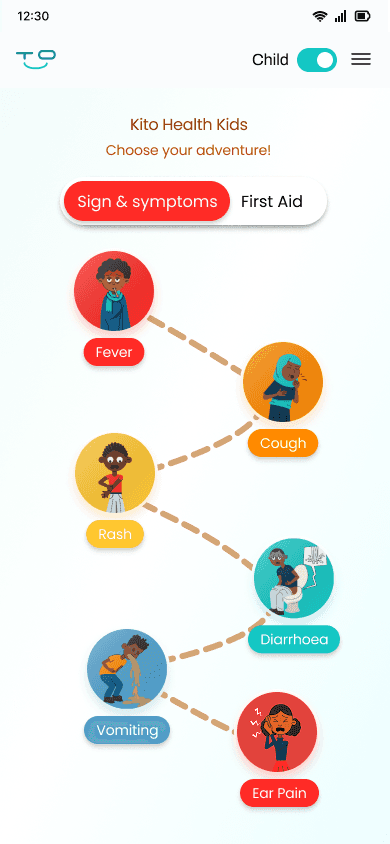
Kito is an app that helps parents track their child's health, including growth, milestones, and vaccinations, while also giving them access to first aid education and emergency guidance.
Timeline
October 2025- current
Background
Many parents in informal settlements like Kibera don't have easy or consistent access to healthcare. That means missed vaccinations, undetected developmental delays, and not knowing what to do in a medical emergency. Kito was built to close that gap by putting free, reliable health guidance directly in parents' hands.
This category details the step-by-step approach taken during the project, including research, planning, design, development, testing, and optimization phases.
Research & Planning
We looked into how parents in low-income communities access (or struggle to access) health information so that the app could be built around real needs, not assumptions.
Design & Prototyping
I designed simple, high-contrast interfaces, keeping usability front and center for parents with varying literacy levels and device quality.
Testing & Optimization
We tested the app multiple times in Kibera schools, and directly with parents, to make sure it actually worked for the people it was built for, not just in theory.
Implementation
Based on feedback from testing, I applied accessibility best practices including WCAG-informed color contrast and clearer typography to make the interface easier to read and navigate for parents with varying literacy levels and lower-end devices.
Accessibility-First Interface Design
Designed for real-world conditions, low digital literacy, older devices, bright outdoor lighting, using clear icons, minimal text, and intuitive navigation so parents don't need a tutorial to use it.
End-to-End Child Health Tracking
Turned scattered paper records and memory into one simple, reliable system for logging growth, milestones, and vaccinations.
Child-Focused First Aid and Signs & Symptoms Learning Space
A separate, age-appropriate section where children learn first aid and how to recognize signs and symptoms, extending Kito's mission beyond parents to kids themselves.
This section highlights the key outcomes of the project including peer feedback, design improvements, and how the project contributed to my growth as a UX designer.
Strong User Reception in Testing
Parents and children in Kibera schools responded positively during testing, validating that the accessibility-first approach simple navigation, high contrast, minimal text actually worked for the intended users, not just in theory.
Deeper Accessibility & Inclusive Design Insight
Testing in real, resource-limited environments sharpened my understanding of designing for low digital literacy, device constraints, and accessibility standards like color contrast insight that now shapes how I approach every design decision.
A Scalable, Presentation-Ready Design System
The final interface was clean, consistent, and confident enough to showcase to real stakeholders and partners proving the design wasn't just usable, but polished enough to represent the product at a professional level